AI
Your next visitor may be an AI agent. Make your website agent-ready
AI agents from Meta and OpenAI now send about 90 percent of agent requests to websites. Here is how to make your site readable, trusted and buyable for them.
On 9 November 2026, the security firm HUMAN Security published its October report on AI agent traffic. The numbers are hard to ignore. AI agents from Meta and OpenAI made about 90 percent of all agent requests that reached the websites HUMAN protects. Meta's Muse alone sent 59 percent. Total agent traffic was about eight times higher than in August and about 2.6 times higher than in September. Your website already has a new kind of visitor. It does not scroll. It does not browse for fun. It reads, compares, and decides.
What the numbers actually say
HUMAN's report, published on 9 November 2026, counts requests on the sites and apps it protects, not the whole internet. A single agent session can register several requests, so the figures describe traffic on those sites, not every visit on the web. Even with that caveat, the shape of the change is clear. Meta's Muse held 59 percent of agent requests in October. OpenAI's products held about 30 percent between them, with ChatGPT Agent at 16 percent and Codex Browser at 8.8 percent. Together, four agents from two companies sent about 89 percent of all agent requests.
Most of that traffic is shopping, not chatting. In October, 85 percent of agent requests went to product and search pages. Only 1.9 percent reached a checkout, though checkout requests roughly doubled from the month before. E-commerce sites drew about 60 percent of all agent requests, with travel second. The agents are not there to read your blog. They are there to find a product, compare it, and buy it for someone.
Why agents choose, not just visit
On 11 November 2026, two partners at Andreessen Horowitz published an essay called "Welcome to the B2A Economy". Their argument is simple. Companies spent years building defences against automated traffic. Now they have to compete for its business, because agents, not people, are becoming the main users of the web. Agents decide which sites, tools and paid plans get chosen. A shop that is hard for an agent to read is a shop the agent skips.
Meta launched Muse on 8 September 2026 as a personal agent for US users. It runs its own browser, fills in forms, books travel and checks out. OpenAI's agents can now pay as well. On 13 November 2026, OpenAI launched ChatGPT Wallet, which lets its agents complete a purchase after the user approves it. The research visit and the purchase are becoming one trip, made by software on a person's behalf.
Some doors are closing
Not every business is welcoming agents. On 11 November 2026, United Airlines revised its contract of carriage to ban unauthorised third-party AI agents from booking, changing or servicing tickets, and from buying other products, even when the passenger approves each step. The airline requires its own prior written permission before an automated agent may access its site or app, and it can cancel reservations made by unauthorised agents. Bookings made before 11 November are still honoured.
The lesson is not that agents are bad. It is that access is the website owner's choice, not the agent's. Your site will have to choose too, and the choice should be deliberate, not an accident of your firewall settings.
The five checks to make your site agent-ready
- Decide your policy in writing. Welcome verified agents, block all agents, or welcome some and block others. Write the decision down before you change any setting, so your developer and your support team act the same way.
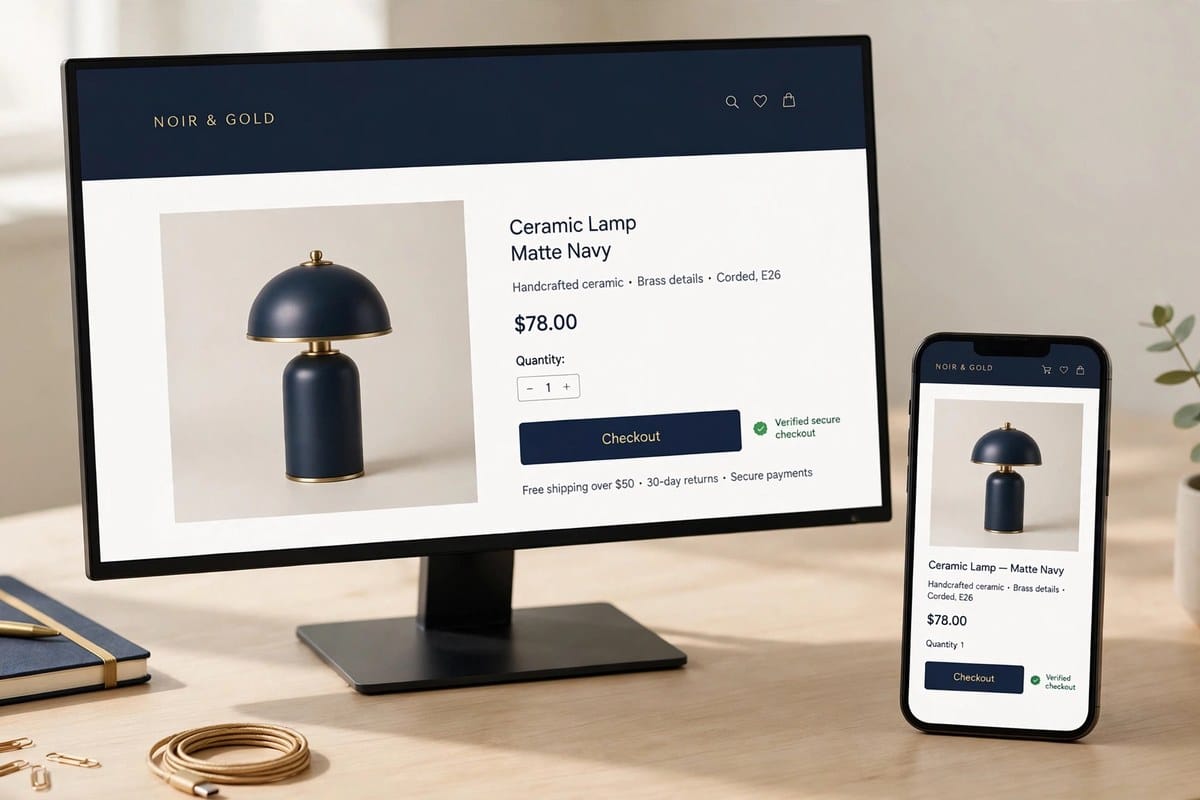
- Make your pages readable by software. Put the facts an agent needs on the product page itself: a clear title, the price, availability and shipping. Use structured data, and do not hide a key fact inside an image.
- Let verified agents through. Recognise signed agent requests with Web Bot Auth, which lets your site check who sent the request. Ask your developer whether your firewall, CDN or bot rules block agent traffic, and what it takes to allow signed requests.
- Make checkout passable. Show prices and shipping before the payment step, and remove any step only a human can pass, such as a puzzle captcha on the payment page. Ask your payment provider whether agent payments with network tokens are accepted.
- Watch what agents do. Check your server logs for agent traffic. See which pages they visit and where they stop. Fix the page where they stop, because that is where you are losing sales you never see.
What stays the same
People still decide. The agent acts for a person, and purchases still need that person's approval. Your brand, your prices and your service still win or lose the sale. The agent only changes who reads your site first. A site that is clear for software is also clearer for people, so most of this work pays twice.
The takeaway
Agent traffic grew about eight times in two months, and two companies send about 90 percent of it. Your next customer may never visit your site in person. Their agent will. Make the visit easy, decide in writing which agents you welcome, and fix the one page where agents stop. If you want help making your site readable for agents and for AI search, Küstenkurs can review your site and your agent traffic setup. Talk to us. Read also how AI agents can now pay for things and how AI shopping assistants can send customers to fake stores.
Frequently asked questions
What is an AI agent visitor?
Software that visits your site for a person. It reads pages, compares products, and can fill in forms or buy with the person's approval.
Does agent traffic mean bots I should block?
Not always. Some agents are real customers acting for a person. Block abusive bots, but let verified agents through.
How do I know an agent is genuine?
Signed requests use Web Bot Auth, which lets your site check who sent the request. Unsigned requests cannot be verified.
Will agents replace human visitors?
No. People still decide what to buy. Agents do the reading and comparing first, so your pages must convince software and people.
Working on something like this?
Tell us what you are building. We reply to every enquiry.
Related service: AI Search Visibility (GEO)

Black Friday AI deals 2026: what is worth it for a small business, and what is not
Black Friday is today, 27 November 2026. This guide lists the verified AI offers for small businesses, with prices and end dates, and one clear rule for what not to buy.
Read article
Berlin takes a 1 euro stake in Cohere. What sovereign AI means for German SMEs
Germany will take a symbolic 1 euro stake in Cohere, with wide governance rights. This article explains sovereign AI in plain terms and what it means for German SMEs.
Read article
Canada will pay up to 80% of your AI compute bill. What small firms can claim before the deadlines
Canada expanded its AI Compute Access Fund to 1 billion dollars. This plain guide explains the 80 percent and 50 percent rates, the project size limits and the two December and January deadlines.
Read article