AI
Five AI giants sued over frontier AI. What small businesses should learn
Four nonprofits sued OpenAI, Google, Anthropic, Meta and SpaceX AI on 12 November 2026. No court has ruled yet, but the case carries four practical lessons for your business.
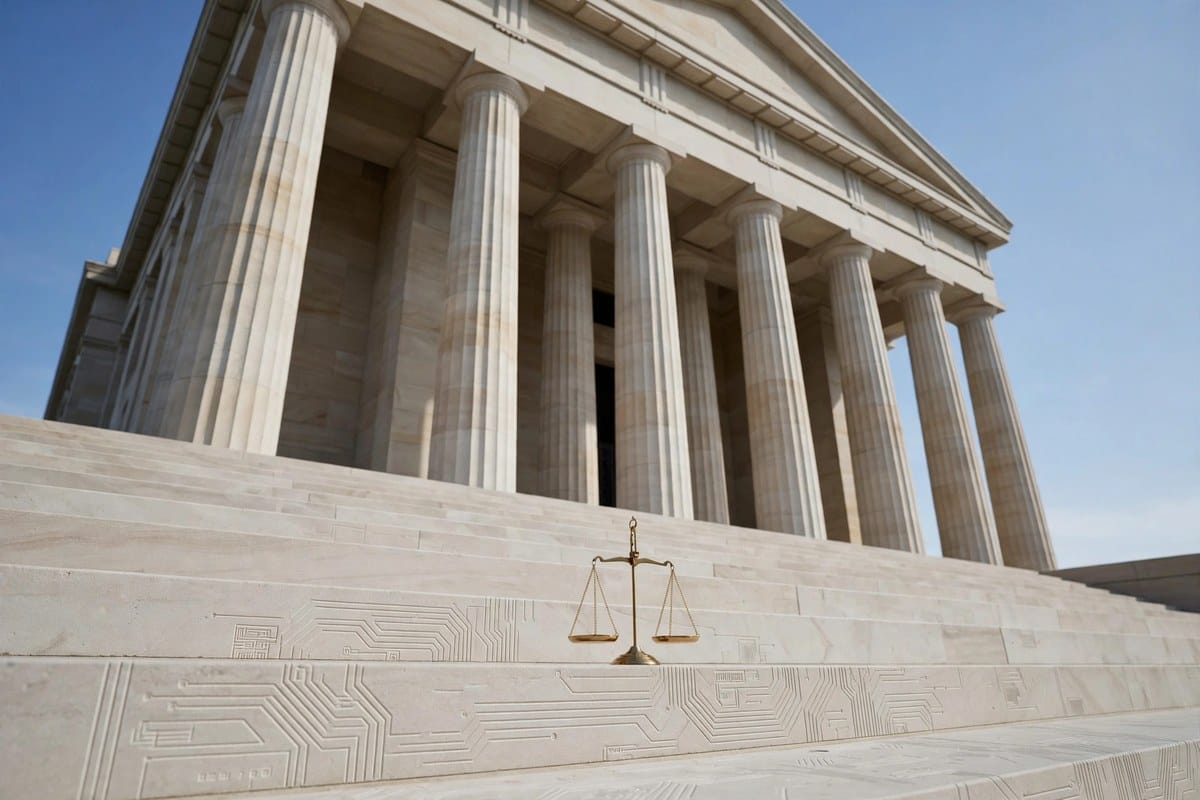
On 12 November 2026, four nonprofit organisations filed a lawsuit in San Francisco against five of the biggest names in AI: OpenAI, Google, Anthropic, Meta and the AI division of SpaceX. They ask the court to restrict further development of AI systems more advanced than the leading models today. No court has ordered anything yet. The case is an allegation, not a finding. But it is a signal every business that uses AI should read.
Who filed, and what they ask
The plaintiffs are the Irreplaceable Education Fund, Public Citizen, the Heat Initiative and the Alliance for Secure AI, organisations focused on technology accountability and public safety. They invoke California's Unfair Competition Law and argue that the companies' business practices create a public nuisance by exposing people and organisations to potential harm.
They cite public statements by technology executives, including Anthropic chief executive Dario Amodei and SpaceX chief executive Elon Musk, about the possibility of advanced AI systems causing widespread harm. They want a court order stopping the companies from developing or deploying AI systems more advanced than their current leading models, including the systems behind ChatGPT, Google's Gemini and Anthropic's Claude.
Why this matters even if the case fails
A court may well refuse to halt AI development. The case still matters, because it is part of a wider turn from voluntary promises toward binding rules. Canada signed the Paris Call on AI safety and security on 9 November 2026, a joint declaration by governments and frontier AI developers on shared risk evaluation, incident reporting and whistleblower protection. On 10 November 2026, Australia's prime minister said a new regulator would enforce legislated standards on frontier AI companies operating there.
Rules are already live in some places. In Ontario, employers with 25 or more staff have had to disclose AI use in publicly advertised job postings since 1 January 2026. The direction is consistent across countries: document what your AI does, keep a human responsible, and expect to show your work.
Four habits that protect your business
- Do not depend on one provider. Know which of your tools use which model, and keep a second option for the work that matters most. If one provider changes its terms, its prices or its models, your business keeps running.
- Keep a human in the loop. Let AI draft, summarise and suggest, but let a person approve anything that reaches a customer, a contract or a payment. The lawsuit is about systems acting on their own. Your defence is a person who checks.
- Write down how you use AI. List the tools, what each one does, and what data it touches. If a customer, a partner or a regulator asks, you have an answer in one page, not a search through old emails.
- Watch the rules, not just the tools. AI law is moving in Canada, in Europe and in the United States at the same time. Check once a month what changed, and note the one change that touches your business.
The takeaway
The lawsuit may fail. The direction will not. Governments and courts are moving from asking AI companies to behave well toward telling them what they must do, and that pressure reaches every business that builds on their tools. Document your AI use, keep human approval, and avoid single-provider dependence. Those three habits cost little, and they leave you ready whatever the court decides. If you want help mapping which AI tools your business depends on and where the risks sit, Küstenkurs can run the check with you. Talk to us.
Frequently asked questions
Does the lawsuit affect my business today?
No. No court has ordered anything. It matters as a signal of where AI rules are heading, not as a rule today.
Should I stop using ChatGPT, Gemini or Claude?
No. Keep using them, but do not build your whole business on one provider. Know your second option.
What should I document about my AI use?
Which tools you use, what each one does, and what data it touches. One page is enough for most small businesses.
Will AI tools get more expensive or restricted?
Nobody knows yet. Rules are moving in several countries at once, so the practical step is to watch them monthly and keep a human approving what reaches customers.
Working on something like this?
Tell us what you are building. We reply to every enquiry.
Related service: AI Search Visibility (GEO)

Black Friday AI deals 2026: what is worth it for a small business, and what is not
Black Friday is today, 27 November 2026. This guide lists the verified AI offers for small businesses, with prices and end dates, and one clear rule for what not to buy.
Read article
Berlin takes a 1 euro stake in Cohere. What sovereign AI means for German SMEs
Germany will take a symbolic 1 euro stake in Cohere, with wide governance rights. This article explains sovereign AI in plain terms and what it means for German SMEs.
Read article
Canada will pay up to 80% of your AI compute bill. What small firms can claim before the deadlines
Canada expanded its AI Compute Access Fund to 1 billion dollars. This plain guide explains the 80 percent and 50 percent rates, the project size limits and the two December and January deadlines.
Read article