AI
Canada just joined Europe's supercomputing network. What EuroHPC means for Canadian AI
At the Canada-EU Summit in Montreal on 30 October, Canada joined the European High Performance Computing Joint Undertaking. Here is what changes for Canadian AI projects, and what does not.
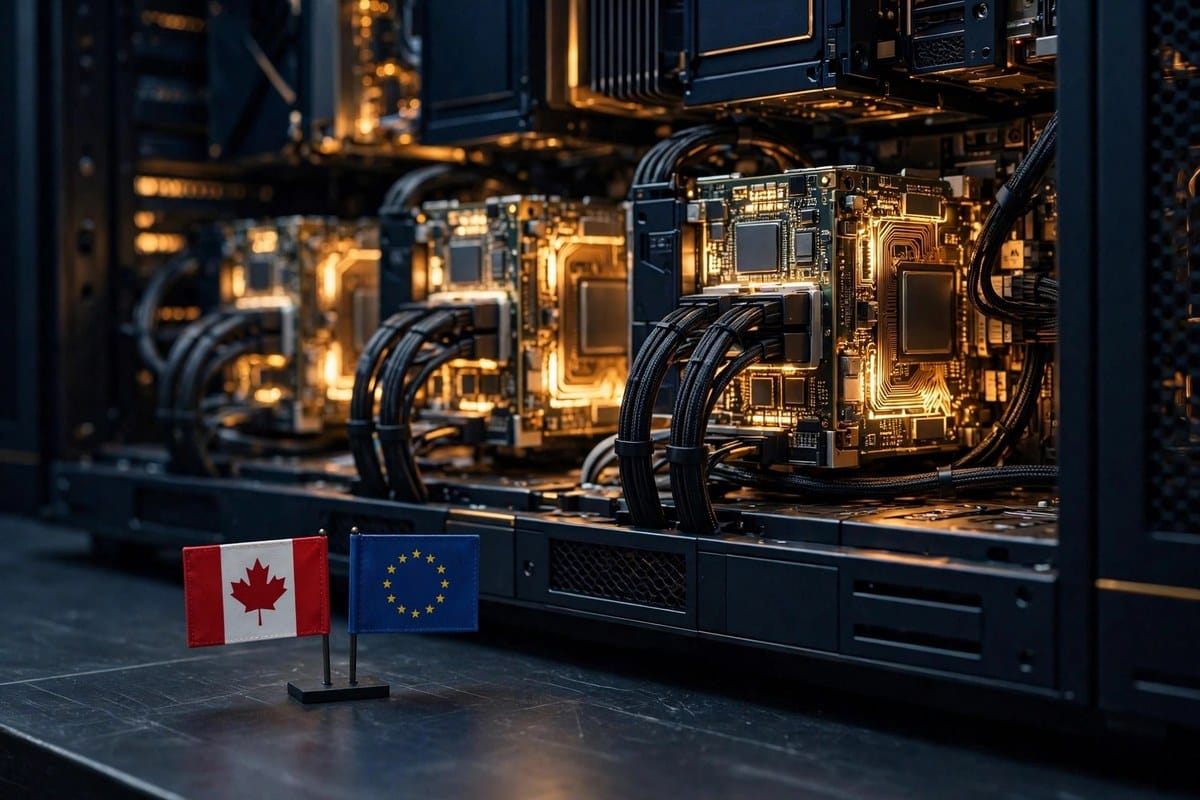
On 30 October 2026, at the Canada-EU Summit in Montreal, Canada officially became the 39th Participating State of the European High Performance Computing Joint Undertaking, known as EuroHPC JU. Canadian researchers, innovators and businesses now have a formal path to some of the most powerful supercomputers in the world, including JUPITER, one of the fastest machines ever built. For a Canadian firm that trains AI models or runs heavy computing work, this is the most important infrastructure news of the year. It is also the start of a process, not the end of one.
What EuroHPC is
EuroHPC JU is a European funding body created under EU law. It pools resources from the European Union and participating countries to buy supercomputing infrastructure and to fund research in supercomputing, AI infrastructure, quantum computing, software and skills. Its Governing Board brings together the European Commission and 39 Participating States. Canada is the newest of them.
The joint statement from the summit says Canada's participation will strengthen connections between Canadian and European supercomputing resources and pave the way for further integrating the two AI innovation ecosystems. The European Commission's digital strategy page adds that the two sides also agreed that Destination Earth, the EU programme to build a digital twin of the planet, will welcome Canadian cooperation on AI-powered climate modelling.
What Canada gets
The Prime Minister's office put it plainly. Canada has joined EuroHPC JU, and the initiative will give Canadian researchers, innovators and businesses access to JUPITER, one of the world's most powerful supercomputers. It will also speed up collaboration on AI and research.
The summit produced more than this one item. On the first day, Canada announced an equity investment of up to 1.6 billion Canadian dollars in Cohere, the Toronto AI company, conditioned on Canadian jobs, compute and headquarters commitments. Canada and the EU also signed a Digital Trade Agreement on 30 October, described by the European Council president as a CETA for a digital world. The two sides will also work toward mutual recognition in digital identity and credentials, AI conformity assessment and cybersecurity.
For Canadian firms, the pattern is clear. Canada is building its AI future with Europe, not only with the United States. That matters for any business that sells software or services across the Atlantic, because shared infrastructure and shared rules make cross-border work simpler.
What does not change yet
Participation is a formal channel, not blanket access. The available official statements do not specify which EuroHPC systems Canadian organisations can use, who will be eligible, what projects qualify, or whether any particular service will be available on a set date. The practical rules on access, funding and eligibility are expected in future EuroHPC guidance and bilateral follow-up.
That is normal for an agreement of this size, and it is not a reason to ignore it. It is a reason to plan around it. A firm that waits for the final rulebook before thinking about its computing needs will be months behind the firms that start the conversation now.
What Canadian firms should do
- If you run AI workloads that need serious computing power, talk to your research partners and your university contacts now. EuroHPC access will flow through programmes and calls, and the firms that already have a research relationship will hear about them first.
- Read our earlier piece on the Cohere investment, Sovereign AI for Canada and Germany, and on Canada's compute build-out, Toronto's chip deal and Ottawa's compute plan. The three stories belong together: domestic models, domestic chips, and now shared European supercomputers.
- If you sell into Europe, note the direction of travel. Shared AI infrastructure and shared conformity assessment mean a product certified once may soon be accepted on both sides of the Atlantic. That changes the business case for entering the German market.
- Keep your data where your customers expect it. EuroHPC does not change Canadian privacy law, and European partners will still ask where data is stored and processed. Our Digital Systems team builds exactly that kind of cross-border setup.
Closing takeaway
Canada joining EuroHPC is not a supercomputer you can log into tomorrow. It is a door that is now open, with the rules for walking through it still being written. Canadian firms that train models, run simulations or sell AI into Europe should treat 30 October 2026 as the day their computing options doubled, and start the conversations that turn an agreement into access.
Frequently asked questions
What is EuroHPC JU?
The European High Performance Computing Joint Undertaking, a funding body created under EU law that pools resources to buy supercomputing infrastructure and fund research in supercomputing, AI, quantum computing and software.
When did Canada join EuroHPC?
On 30 October 2026, at the Canada-EU Summit in Montreal. Canada became the 39th Participating State of the undertaking.
Does Canada now have access to European supercomputers?
Not automatically. Participation creates the formal channel, and Canadian researchers, innovators and businesses are expected to gain access to systems such as JUPITER. The practical rules on eligibility, funding and access are still to be published.
What else did the Canada-EU Summit produce?
An equity investment of up to 1.6 billion Canadian dollars in Cohere, a Digital Trade Agreement signed on 30 October, and cooperation on AI-powered climate modelling through the EU Destination Earth programme.
Working on something like this?
Tell us what you are building. We reply to every enquiry.
Related service: AI Search Visibility (GEO)

Black Friday AI deals 2026: what is worth it for a small business, and what is not
Black Friday is today, 27 November 2026. This guide lists the verified AI offers for small businesses, with prices and end dates, and one clear rule for what not to buy.
Read article
Berlin takes a 1 euro stake in Cohere. What sovereign AI means for German SMEs
Germany will take a symbolic 1 euro stake in Cohere, with wide governance rights. This article explains sovereign AI in plain terms and what it means for German SMEs.
Read article
Canada will pay up to 80% of your AI compute bill. What small firms can claim before the deadlines
Canada expanded its AI Compute Access Fund to 1 billion dollars. This plain guide explains the 80 percent and 50 percent rates, the project size limits and the two December and January deadlines.
Read article