AI
A Canadian AI startup raised $43M to spot wildfires early. The lesson for small business
SenseNet raised $43 million to detect wildfires early with sensors and AI. Here is what Canadian and German small businesses can learn from a system that measures value in hours.
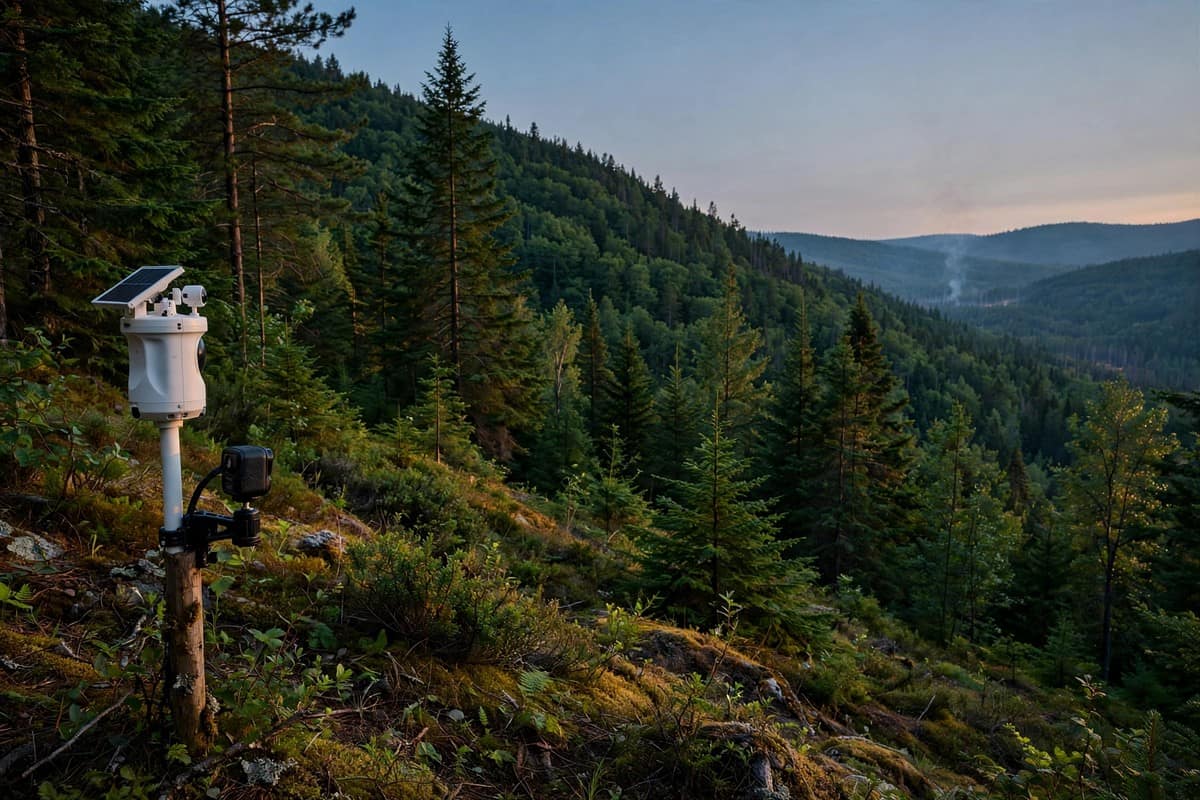
A Canadian company that spots wildfires before people call 911 just raised $43 million USD. SenseNet, based in North Vancouver, secured Series B financing led by Idealist Capital. It uses sensors, cameras, satellite data and AI together. The lesson is simple. AI earns its place when it solves a physical problem and proves it in hours.
Why this funding round matters beyond wildfires
Fusion Fund, Stormbreaker Ventures, Thin Line Capital, the National Bank of Canada and the Sitka Foundation also took part. The round includes primary investment, secondary sales and debt financing. It plans to use the capital to grow in the United States and internationally, expand its teams and advance its system. Over the last year, it more than tripled its global wildfire monitoring footprint, from 130 million acres to more than 450 million acres.
What SenseNet actually does
SenseNet has more than 5,300 ground-based sensors and AI-enabled cameras deployed across 12 countries. That network enabled early detection of more than 10,000 fires. Its customers in the United States include the Palo Alto and Woodside fire departments, Santa Clara County and San Jose Water in California, Jefferson County and the City of Colorado Springs in Colorado, plus others in Nevada and Hawaii.
During the past wildfire season, SenseNet detected several fires hours before the first 911 reports, day and night. Unlike a single-technology approach, it combines ground sensors, AI-enabled cameras, satellite intelligence, drone technology and predictive analytics in one system.
The lesson: AI that touches the physical world
Many small business AI projects start with text, reports or marketing. SenseNet starts with heat, smoke and terrain. That is the difference owners in manufacturing, farming, logistics, warehousing and property should notice. A sensor costs little. A missed warning can cost a lot. Ask which physical problem in your business is most expensive when found too late.
What a small business can copy this week
- Pick one physical problem. Not three. One you can price in dollars or in hours.
- Add a simple sensor. Temperature, humidity, vibration or motion is often enough to start.
- Connect it to AI monitoring that sends a warning, instead of only writing a report.
- Set a clear threshold. Who gets the alert, and what happens in the first 30 minutes?
- Name one person responsible. A system with no owner reports, but nobody acts.
Start with a pilot in one room, on one machine or at one site. For a practical test, see how to run an AI pilot as a small business in Canada.
How to measure it in hours, not reports
SenseNet measures success by whether a fire is found hours before the first 911 call. Small businesses need a measure that clear. Count the time from the first unusual reading to your team acting on it. Count false alarms too. Then compare the costs: one sensor and monthly monitoring, against one incident found hours later.
What not to copy
Do not copy the size of the funding. $43 million is right for SenseNet because it already works in 12 countries. A small business needs a small, provable start. Do not promise customers results you cannot measure. SenseNet detects fires early. It does not stop wildfires. See workflow automation for where a warning fits in your routine.
The takeaway for owners
AI that solves a physical problem sells, because the value is visible. Start with a problem you can touch, add a sensor and measure how many hours earlier you can act.
Source: GlobeNewswire, 24 November 2026
Frequently asked questions
How much did SenseNet raise and who invested?
SenseNet secured $43 million USD in Series B financing led by Idealist Capital. Fusion Fund, Stormbreaker Ventures, Thin Line Capital, the National Bank of Canada and the Sitka Foundation also participated.
How does SenseNet detect wildfires early?
SenseNet has more than 5,300 ground-based sensors and AI-enabled cameras in 12 countries. It combines that data with satellite intelligence, drone technology and predictive analytics to detect fires early.
How can a small business copy this model?
Start with one physical problem, such as a cold store or a water leak. Add a simple sensor, connect it to monitoring and measure how many hours earlier you can act than you do today.
Does SenseNet stop wildfires?
No. SenseNet detects fires early so fire services and communities can act sooner. It does not stop wildfires and it does not replace a fire service.
Working on something like this?
Tell us what you are building. We reply to every enquiry.
Related service: AI Search Visibility (GEO)

Black Friday AI deals 2026: what is worth it for a small business, and what is not
Black Friday is today, 27 November 2026. This guide lists the verified AI offers for small businesses, with prices and end dates, and one clear rule for what not to buy.
Read article
Berlin takes a 1 euro stake in Cohere. What sovereign AI means for German SMEs
Germany will take a symbolic 1 euro stake in Cohere, with wide governance rights. This article explains sovereign AI in plain terms and what it means for German SMEs.
Read article
Canada will pay up to 80% of your AI compute bill. What small firms can claim before the deadlines
Canada expanded its AI Compute Access Fund to 1 billion dollars. This plain guide explains the 80 percent and 50 percent rates, the project size limits and the two December and January deadlines.
Read article