AI
The attacker may now be an AI agent. What the Bell breach means for your business
Bell confirmed an 'agentic threat actor' broke into its systems on 17 November and stole enterprise customer data. No one has said what made the attacker agentic.
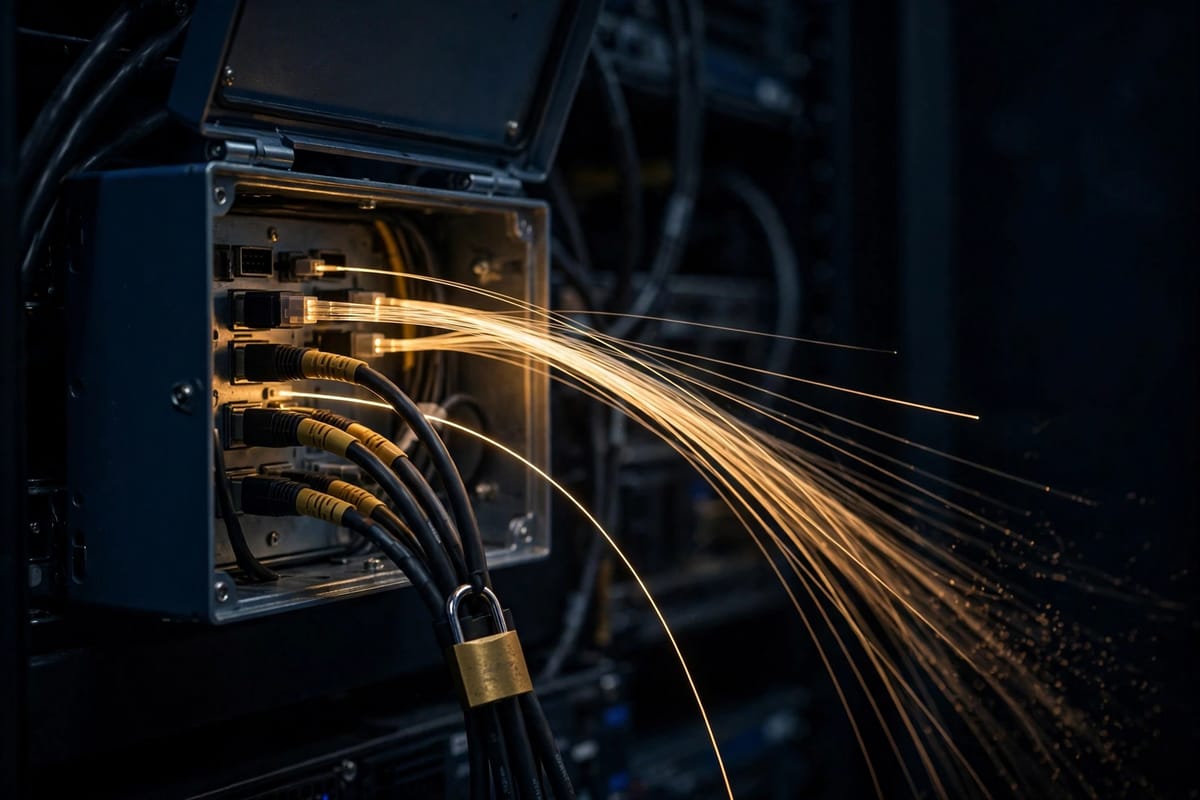
On 17 November 2026, someone broke into Bell Canada, one of Canada's largest telecom providers, and stole enterprise customer data. Bell confirmed the incident on 20 November. What makes the story matter for every business is one word. Bell described the attacker as an "agentic threat actor". Nobody has explained yet what made the attacker agentic.
What happened on 17 November
According to Bell's statements to BleepingComputer and CBC, an unauthorised party accessed several Bell systems on Tuesday 17 November, including a pre-production environment of Maximo, the system Bell uses to order and provision telecom circuits for business customers. The attacker exfiltrated enterprise customer data.
Bell says it contained the incident immediately after learning of it and secured its systems, and that customer services were not affected. It is sharing indicators of compromise and threat-hunting information with enterprise customers and with the Canadian Centre for Cyber Security. It has also contacted the Royal Canadian Mounted Police cybercrime unit and plans to inform other regulators.
Bell has not said how many enterprise customers are affected or how much data was taken. It has not said who the attacker is. "We currently do not know the attribution," Bell told BleepingComputer. Nobody has come forward to claim responsibility.
What was taken, and what was not
From the customer notification seen by BleepingComputer, the data that may have been taken includes business contact information such as names, job titles, corporate email addresses, phone numbers and business addresses, information contained in ticket titles, some IP addresses associated with network elements or systems, and limited contextual information.
Bell says the affected dataset did not contain credentials, highly sensitive personal information, PDFs, file attachments or other supplementary information stored in Maximo. In a later customer email on 23 November, Bell also named names, mailing addresses, phone numbers, email addresses, account numbers, product information and the date and amount of customers' last payments, and repeated that no highly sensitive information such as credit card numbers or banking information was accessed.
The distinction matters, but it only partly reassures. Business contact data, ticket titles and IP addresses are exactly the raw material for a convincing phishing attempt. An attacker who knows which ticket a company opened and which circuit it ordered can plausibly pretend to be Bell. Bell itself warned customers to watch for unsolicited requests and social engineering attempts by people impersonating the company.
The word that needs a warning
"Agentic" is the word in this story to read most carefully. Bell used it in statements to the press. No explanation has been published: no model, no tool, no framework, no degree of autonomy. The only basis for calling this an AI agent incident is one word.
That does not mean the incident is unimportant. A break-in at a major telecom provider is serious whatever tool was used. It means companies should not adopt the term as fact. The honest way to talk about it is: Bell says the attacker was agentic. Bell has not explained what that means.
For small businesses, the lesson is still concrete. Attackers do not need AI to steal contact data and use it for phishing. What changes is the speed and the credibility of the follow-up attacks. An attacker with ticket titles and IP addresses can write an email that looks genuine, at a pace a small team cannot match if it checks every message by hand.
Five checks for your business this week
First, warn your team about calls and emails pretending to be your telecom provider, especially ones that quote ticket numbers or circuit details. Agree that nobody changes credentials or payments because of an unexpected request.
Second, check who in your company can see customer contact data and ticket histories. If every employee can see everything, one stolen login is worth more than it should be.
Third, turn on two-factor authentication for your email account, your domain registrar, and your telecom portal, if you have not already. Those three accounts decide whether an attacker can take over your identity.
Fourth, ask your provider how it contacts you during an incident. If you know it never asks for credentials by email, you will spot a fake at once.
Fifth, test your recovery. A breach is not the moment to find out whether your backups work or who holds the reset passwords.
The takeaway
The Bell incident shows two things at once. First, the line between a human break-in and an agent-assisted break-in is getting blurry, and a single word in a press statement is not evidence. Second, the practical danger for a small business is not in the word, it is in the data: contact details, ticket titles and IP addresses are enough for credible phishing. Warn your team, lock down the three accounts that matter, and do not wait for someone to explain what "agentic" means.
Read more in our security checklist Your AI tools can now touch your bank account and in our digital systems guide.
Frequently asked questions
What happened at Bell?
On 17 November 2026, an unauthorised party accessed several Bell systems, including a pre-production environment of Maximo, the system for ordering and provisioning circuits. Bell confirmed the incident on 20 November.
What data was stolen?
Business contact information such as names, job titles, email addresses and phone numbers, information in ticket titles, and some IP addresses. Bell says the dataset did not contain credentials, highly sensitive personal information, or file attachments.
What does 'agentic threat actor' mean?
Bell described the attacker in press statements as an 'agentic threat actor'. No explanation has been published: no model, no tool, no framework. The only basis is the word itself.
Why are contact data and ticket titles dangerous?
The data is exactly the raw material for credible phishing. Someone who knows ticket titles and IP addresses can plausibly pretend to be Bell. Bell itself warned customers about social engineering attempts.
What should a small business do now?
Warn your team about calls and emails pretending to be your provider. Turn on two-factor authentication for email, your domain registrar and your telecom portal. Ask your provider how it contacts you during an incident.
Working on something like this?
Tell us what you are building. We reply to every enquiry.
Related service: AI Search Visibility (GEO)

Black Friday AI deals 2026: what is worth it for a small business, and what is not
Black Friday is today, 27 November 2026. This guide lists the verified AI offers for small businesses, with prices and end dates, and one clear rule for what not to buy.
Read article
Berlin takes a 1 euro stake in Cohere. What sovereign AI means for German SMEs
Germany will take a symbolic 1 euro stake in Cohere, with wide governance rights. This article explains sovereign AI in plain terms and what it means for German SMEs.
Read article
Canada will pay up to 80% of your AI compute bill. What small firms can claim before the deadlines
Canada expanded its AI Compute Access Fund to 1 billion dollars. This plain guide explains the 80 percent and 50 percent rates, the project size limits and the two December and January deadlines.
Read article