AI
Germany and NVIDIA bet on physical AI. What it means for manufacturers
Germany and NVIDIA agreed to build industrial AI together, and Agile Robots raised 500 million dollars at an 8.5 billion dollar valuation. What suppliers should do now.
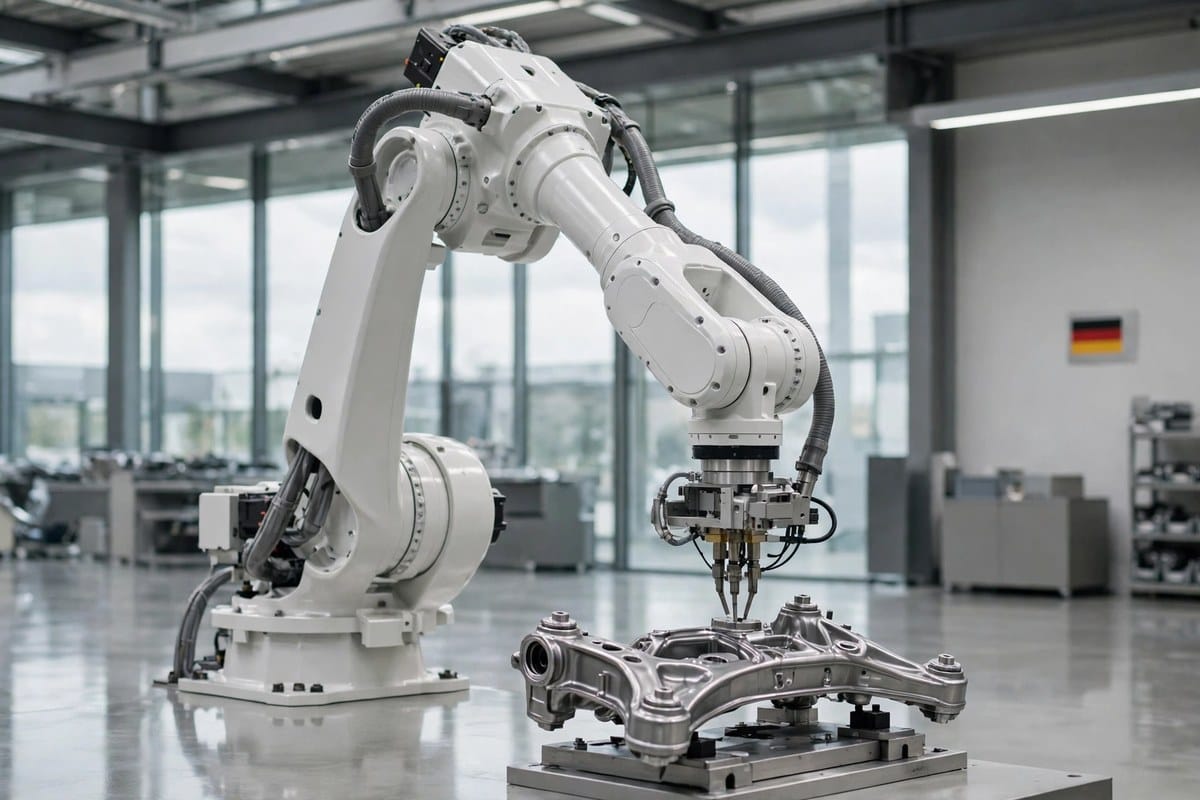
Germany wants to build the machines that AI runs on, not just use the software. The German government and NVIDIA agreed to develop industrial AI and models for physical AI together. NVIDIA also announced investments in four German startups. Then, on 12 November 2026, Munich-based Agile Robots raised 500 million dollars at a valuation of 8.5 billion dollars, in a round led by SoftBank with NVIDIA and Hitachi taking part. Physical AI, the kind that moves robots and machines, is becoming a German industrial story.
What the NVIDIA deal covers
The agreement is a memorandum between the German government and NVIDIA. The two sides plan a joint initiative to develop physical AI models and to use AI more widely in German industry. Germany brings its strength in mechanical engineering and manufacturing. NVIDIA brings the computing platforms and the models.
NVIDIA also named four German startups it plans to invest in. Agile Robots, from Munich, builds industrial robots, including the humanoid Agile ONE. Avelios Medical builds an AI system for hospitals. Mirelo builds models that generate sound effects, speech and music for video. Reflex Aerospace, from Berlin, builds satellites with a lead time to launch of around 12 months. The four companies cover factories, hospitals, media and space, which shows how wide the government sees this field.
Agile Robots, in numbers
Agile Robots is the headline of the week. The company was founded in 2018 as a spin-off from the German Aerospace Center. Its funding round, announced on 12 November 2026, raised 500 million dollars and valued the company at 8.5 billion dollars, or 7.7 billion euros. That makes it one of Europe's most valuable robotics companies, with total funding of about 2 billion dollars.
The company says it has deployed more than 20,000 robots in automotive, consumer electronics and logistics. It employs more than 2,000 research and development specialists and holds more than 650 patents. Earlier in 2026 it opened a factory near Munich that it says can produce up to 10,000 humanoid robots a year. The new money will fund expansion in the United States, more production capacity in Germany, and entry into new markets.
Why Germany, and why now
A study by the market research firm Strand for Amazon Web Services, published on 2 November 2026, found that nearly a quarter of German startups work on physical AI, ahead of about 20 percent in the United States, Japan and South Korea. Germany also ranked first on workforce and skills in the study, based on about 4,400 respondents across 20 countries.
The same study found the brake on growth. Some 70 percent of respondents said potential customers were hesitating to place orders, and only 26 percent called their own economy ready for physical AI. More than three quarters expect the technology to become standard in their industry within five years. The gap between German capability and German orders is exactly what the NVIDIA deal and the Agile Robots round are meant to close.
The hardware wave reaches beyond robots. On 10 November 2026, Dresden-based Sparxity raised 80 million euros for sparse-native AI computing, with customers in Europe and the United States and a deployment at the Jülich Supercomputing Centre. Chips, robots and factories are moving together.
What manufacturers and suppliers should do
- Map the steps a robot could take. Look for repetitive handling, inspection and packing on your own line. Start with one step, not the whole factory.
- Ask your customers about their automation plans. If a customer automates, your parts, your tolerances and your delivery times must fit their new line. A supplier that asks early stays in the conversation.
- Check your data. Robots and AI systems need clean, current data about parts, orders and machines. If your data lives in five spreadsheets with five names for the same part, fix that first.
- Give one person ownership of the topic. A pilot project needs an owner inside the company who talks to vendors, tracks costs and reports results. Without an owner, the pilot dies quietly.
- Visit a working installation. Agile Robots alone has more than 20,000 robots deployed. Seeing one in a real factory, doing a real job, tells you more than any brochure.
The takeaway
The NVIDIA deal and the Agile Robots funding say the same thing. Physical AI is leaving the lab and entering German factories, with government and private money behind it. The orders will follow more slowly than the headlines, because customers are still cautious. Suppliers that map one automatable step, clean their data and talk to their customers now will be ready when the orders come. If you want help working out where automation fits in your own production, Küstenkurs can map it with you. Talk to us. For background, read how physical AI is reaching German factories.
Frequently asked questions
What is physical AI?
AI that moves machines in the real world: robots, vehicles and factory equipment, instead of only software on a screen.
Is this only for big car makers?
No. Suppliers, workshops and logistics firms feel it first, because their customers automate and expect parts and delivery to fit new lines.
What does the NVIDIA deal change for a small supplier?
It signals where investment and orders will flow. The practical step is to map one automatable task and talk to your customers about their plans.
When will robots arrive in ordinary workshops?
More than three quarters of the firms in the Strand study expect physical AI to become standard in their industry within five years. Preparation now beats catching up later.
Working on something like this?
Tell us what you are building. We reply to every enquiry.
Related service: AI Search Visibility (GEO)

Black Friday AI deals 2026: what is worth it for a small business, and what is not
Black Friday is today, 27 November 2026. This guide lists the verified AI offers for small businesses, with prices and end dates, and one clear rule for what not to buy.
Read article
Berlin takes a 1 euro stake in Cohere. What sovereign AI means for German SMEs
Germany will take a symbolic 1 euro stake in Cohere, with wide governance rights. This article explains sovereign AI in plain terms and what it means for German SMEs.
Read article
Canada will pay up to 80% of your AI compute bill. What small firms can claim before the deadlines
Canada expanded its AI Compute Access Fund to 1 billion dollars. This plain guide explains the 80 percent and 50 percent rates, the project size limits and the two December and January deadlines.
Read article