AI
How to Advertise on ChatGPT: Costs, Results and an Honest Verdict for Small Businesses
Yes, you can advertise inside ChatGPT now, in Germany and Canada. Here is what it costs, who sees your ads, how to start, and whether it pays for a small business.
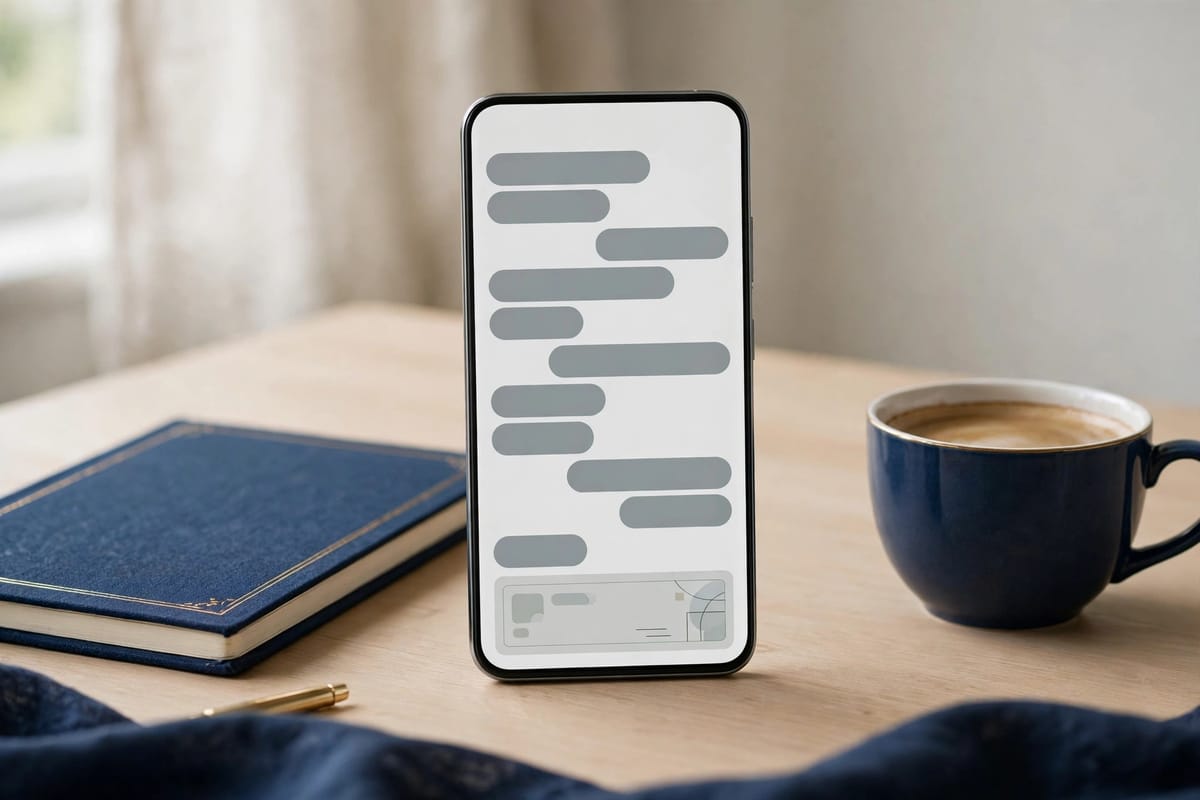
Yes, you can buy ads inside ChatGPT. OpenAI opened self-serve advertising to businesses in Germany and Canada in 2026, and the ads now appear below ChatGPT answers for people on the Free and Go plans. This guide explains what the ads cost, who sees them, how to set up your first campaign at ads.openai.com, and what results small businesses can honestly expect, based on the published tests so far.
What ChatGPT ads are, and who sees them
OpenAI announced advertising in principle on 16 January 2026 and started testing in the United States on 9 February 2026 for logged-in adults on the Free and Go plans (OpenAI, 16 January 2026; OpenAI Help Center, "Ads in ChatGPT"). One ad unit appears below a ChatGPT answer, clearly labelled "Sponsored" and visually separate from the answer. The ads never influence the answers themselves. OpenAI states that ads run on separate systems from the chat model, and advertisers have no ability to shape, rank or alter responses.
Only Free and Go users see the ads, plus logged-out users. Plus, Pro, Business, Enterprise and Edu accounts never see ads, and neither do people under 18 or anyone in a Temporary Chat. OpenAI also shows no ads near sensitive topics such as personal health, mental health or politics (OpenAI Help Center).
Self-serve buying reached 89 countries on 21 October 2026, when OpenAI said more than 100,000 advertisers had run campaigns (OpenAI, 21 October 2026). OpenAI also said that more than 1.2 billion people use ChatGPT each week. That number covers every plan, so it is not the size of the audience your ads can reach, and OpenAI does not break out the Free and Go audience.
Germany and Canada: live, with different minimum budgets
Germany is live. Ads have been served since 24 August 2026, and self-serve buying opened on 31 August 2026 (OpenAI, "ChatGPT Ads expands across Europe", 18 August 2026, updated 31 August 2026). The minimum daily budget is 15 euros.
Canada is live too. The pilot was announced on 26 March 2026, and the minimum daily budget is C$25. In the United States the minimum is $25 a day.
The daily budget is an average over a Sunday to Saturday week. One day can spend up to twice the daily amount, but the week never costs more than seven times the daily amount. A four-week test at the minimum therefore costs about 420 to 450 euros in Germany and about C$700 in Canada.
One rule decides eligibility: the legal entity that will be billed must be based in a country where Ads Manager is available. That is the billed business, not the user or the target market.
For German readers there is one more limit. Personalised ads are not initially available in the European Economic Area and Switzerland, so ads in Germany are contextual, based on the current conversation only, and campaigns targeting those countries cannot use custom audiences (OpenAI Help Center).
How to start: six steps
- Check eligibility. Your billed legal entity must be based in a listed country, and your product must be allowed under OpenAI Ad Policies. Adult content, alcohol, tobacco, gambling, political content and recreational drugs are disallowed. Financial, health and legal services face extra rules and are generally prohibited outside the United States, which matters for German and Canadian businesses.
- Create the account at ads.openai.com. Sign in with an OpenAI account or create one, then enter your advertiser name, website, logo, country, billing currency and time zone. Country, currency and time zone cannot be changed after creation, so choose them carefully.
- Get verified. Business verification runs through Persona, an identity check, and can take several business days. Nothing else is needed while it runs.
- Complete billing. Add your billing profile and payment method. Billing must be complete before any campaign can deliver, and a payment method from a different country than the business entity may not be accepted.
- Prepare the landing page. Allow OpenAI's crawler, OAI-AdsBot, on every landing page, and keep the page relevant to the ad, because the landing page, title and copy are scored by the ad-matching system. Keep ad copy short: OpenAI's developer docs list a 50-character title limit and a 100-character body, though limits appear to vary by account, so confirm them in Ads Manager. Make sure the page also works for AI visitors: make your website agent-ready.
- Set up conversion tracking before you spend. The OpenAI Pixel and the Conversions API record what happens after the click, and tracking is required before a campaign can optimise for conversions. In the European Economic Area, the Pixel will usually need user consent.
Then build the campaign: choose an objective (Reach, Clicks or Conversions), set a daily or total budget at or above the minimum, set geo-targeting, and add ad groups and ads. OpenAI reviews the advertiser, the creative and the destination before ads go live.
If your budget is larger, you can also go through the OpenAI Ads Solutions team or an agency or technology partner. Note that an agency cannot create an advertiser account on a client's behalf. The client entity must own it. And if you want your business to appear in the answer itself, not only below it, start by claiming your business profile in ChatGPT: ChatGPT is now a business directory.
What it costs: bidding, and the November change
There is no rate card. Ads are sold in a relevance-weighted second-price auction, and you bid per ad group. The models are Max CPM for Reach, Max CPC for Clicks, and conversion-optimised CPC or oCPM for Conversions. You pay per 1,000 impressions or per valid click, never per conversion, even on a conversion campaign.
OpenAI recommends starting CPC campaigns at a maximum bid of $3 to $5 per click (OpenAI Help Center). That is a suggested starting bid, not a price.
On 9 November 2026 the bidding changed. New conversion campaigns now use Target CPA, an average cost per conversion you aim for, and new click campaigns use Target CPC, an average cost per click. Both are averages, not caps, so individual auctions can bid above or below them. Max Bid and Max CPC retire on 1 January 2027. "Maximize results" was renamed "Intelligent bidding" and is the default on eligible new ad groups. OpenAI says it does not guarantee a CPA, CPC or ROAS target.
What results to expect, honestly
OpenAI publishes no benchmarks. Its Help Center FAQ states that, as an early platform, ChatGPT Ads does not yet have performance benchmarks across advertisers, industries or campaign types. Every number below is a single test or an estimate, not a benchmark.
Click-through rate in most published tests sits at about 0.7 to 1.3 percent. eMarketer estimated about 0.9 percent. Graphite and Similarweb measured 0.73 percent in the United States and 0.60 to 1.91 percent across nine markets, through 16 September 2026. Workshop Digital measured 1.06 percent in August 2026, and SE Ranking measured 1.30 percent.
Cost per click in published tests ranges from $1.72 to $9.89. Bytown, an agency, reported a $2.42 blended CPC across 42 small-business accounts and $53,649 of spend from May to August 2026. Workshop Digital paid $3.14. Common Thread Collective paid $4.41 for an e-commerce client. Synter paid $9.89 blended across five countries. In Canada, Choice OMG reported C$4.42 to C$4.88.
Conversion is the weak point. Workshop Digital got zero marketing-qualified leads from $2,319 of spend. StubGroup, reported by Search Engine Land, measured a 0.21 percent conversion rate against 3.71 percent for Google Ads. SE Ranking reported almost no sign-ups. Five of seven published tests, mostly B2B lead generation, got zero leads.
The one strong published win is e-commerce. Common Thread Collective's client, with orders over $1,000, reported 3.3x to 6.8x return on ad spend on $9,620 of spend.
OpenAI's own partner stories, published on 5 October 2026, are better: WeightWatchers reported attributed cost per acquisition 15.3 percent below its blended paid-search benchmark; Dose reported that 67 percent of incremental purchases came from net-new customers; Portland Leather reported that 93 percent of ChatGPT Ads visitors were new. None of these came with spend, sample size, period or methodology, so treat them as best cases, not averages.
How does that compare with Google and Meta? WordStream by LocaliQ 2026 benchmarks put Google Search at a 6.64 percent median click-through rate, a $5.42 median cost per click and an 8.18 percent median conversion rate. Meta lead campaigns sit at $1.80 to $1.92 per click with a 7.72 percent conversion rate. The gap has a structural reason: a search ad sits above results the user asked for, while a ChatGPT ad sits after an answer the user already has. Users are mid-conversation, not mid-search. Only one advertiser appears per answer, which cuts both ways.
One early-mover note for Europe: German and French early tests reported CPCs well below US levels, about 0.51 to 2 euros in France, and one French four-day test averaged 0.55 euros CPC with 2.11 percent CTR. The market only opened in August 2026 and few advertisers compete yet. These are small samples from before Target CPA, not German benchmarks, and the window will close as auctions fill.
Is it profitable for a small business?
The short answer: usually not yet as a core channel, sometimes as a cheap, capped test.
It makes sense when one sale covers many $3 to $5 clicks: high-ticket e-commerce, premium local services and high-ticket consumer products. It also fits products people research conversationally before buying, such as travel, home and furnishing, household goods, digital products, education and local services. And it works as a new-customer discovery layer: partner data consistently shows a high share of new visitors, with Portland Leather at 93 percent new and Dose at 67 percent of incremental purchases from net-new customers.
It does not make sense for low-margin or low-ticket e-commerce, where a $2.42 to $4.41 click cannot pay back. B2B lead generation has produced almost no leads in the published tests so far. Regulated categories such as finance, health and legal are effectively blocked outside the United States. And if your buyers mainly use Plus or Pro at work, they will never see your ads at all.
Set the test budget before you start. Four weeks at the minimum costs about 420 to 450 euros in Germany or about C$700 in Canada. German agencies suggest 1,000 to 3,000 euros of media over eight weeks as a realistic test (TIBA Creative). Decide the pass and fail rule in advance: what cost per lead or sale would make you continue, and what would make you stop.
Do not shift core budget. Treat ChatGPT ads as an incremental reach layer at 5 to 10 percent of search budget, not as a replacement for Google or Meta. That is the honest position the published data supports today.
The risks to know before you spend
- Cost. CPCs sit in the same range as Google Search, with a $5.42 median, but without Google's conversion rate.
- Measurement. OpenAI reports only aggregated views and clicks. The view-through window is one day or off, and it cannot be lengthened. Brand-lift and incrementality tools are still in early pilots.
- No benchmarks. You cannot know whether your click-through rate or CPC is good, because OpenAI says it has none yet.
- Beta volatility. Bidding changed on 9 November 2026, creative enhancements were switched on by default on 30 October 2026, and Max Bid and Max CPC retire on 1 January 2027. Rules change monthly, and a campaign built today may need rebuilding in January.
- Ads cannot buy the organic answer. SE Ranking found the advertiser cited in the answer in only 3.63 percent of ad placements. A business that only buys ads and ignores organic visibility inside ChatGPT will not appear in the answer itself.
- Trust. Ads are labelled and separate, but the channel only works if users trust that answers are not bought. OpenAI's own VP of Monetization said at the LUMA Summit on 9 November 2026 that the mission actually requires building an ad business, so the commercial pressure is explicit.
Test it, do not bet on it. If you sell something people research in conversation, and one sale covers dozens of clicks, a capped four-week test at 15 euros a day is a reasonable experiment. If you need leads at Google's conversion rates, or your margins are thin, keep your budget where it already works and wait. And remember: the ad buys the card below the answer, never the answer itself. If you want help testing ChatGPT ads, or making your business visible inside AI answers, talk to Küstenkurs: AI Search Visibility (GEO).
Frequently asked questions
How much do ChatGPT ads cost?
There is no rate card. The minimum daily budget is $25 in the US, 15 euros in Germany and C$25 in Canada. OpenAI suggests starting click campaigns at a maximum bid of $3 to $5 per click. Published tests report CPCs from $1.72 to $9.89.
Who sees ChatGPT ads?
Only people on the Free and Go plans, plus logged-out users. Plus, Pro, Business, Enterprise and Edu accounts never see ads, and neither do under-18s or Temporary Chats.
Are ChatGPT ads available in Germany and Canada?
Yes. In Germany, ads have been served since 24 August 2026 and self-serve buying since 31 August 2026. In Canada, the pilot was announced on 26 March 2026.
Can I target ChatGPT ads by keyword?
No. You write natural-language context hints describing the conversations where your product fits. Geo-targeting works down to region, city or postcode. Custom audiences need at least 25,000 matched users and are not available in the EEA.
Do ChatGPT ads replace Google Ads?
No. Published tests show much lower conversion rates than Google Search, for example 0.21 percent against 3.71 percent in one head-to-head. Treat ChatGPT ads as a capped test, not a replacement.
Can ads buy the recommendation inside the answer?
No. OpenAI states that ads do not influence ChatGPT's answers and run on separate systems. In one study, the advertiser was cited in the answer in only 3.63 percent of ad placements.
Working on something like this?
Tell us what you are building. We reply to every enquiry.
Related service: AI Search Visibility (GEO)

Black Friday AI deals 2026: what is worth it for a small business, and what is not
Black Friday is today, 27 November 2026. This guide lists the verified AI offers for small businesses, with prices and end dates, and one clear rule for what not to buy.
Read article
Berlin takes a 1 euro stake in Cohere. What sovereign AI means for German SMEs
Germany will take a symbolic 1 euro stake in Cohere, with wide governance rights. This article explains sovereign AI in plain terms and what it means for German SMEs.
Read article
Canada will pay up to 80% of your AI compute bill. What small firms can claim before the deadlines
Canada expanded its AI Compute Access Fund to 1 billion dollars. This plain guide explains the 80 percent and 50 percent rates, the project size limits and the two December and January deadlines.
Read article