AI
AI agents are getting a memory and more freedom. Set the limits before you switch them on
Anthropic shows how agents remember things. Singapore warns against too much autonomy. Five limits to set before you switch an agent on in your business.
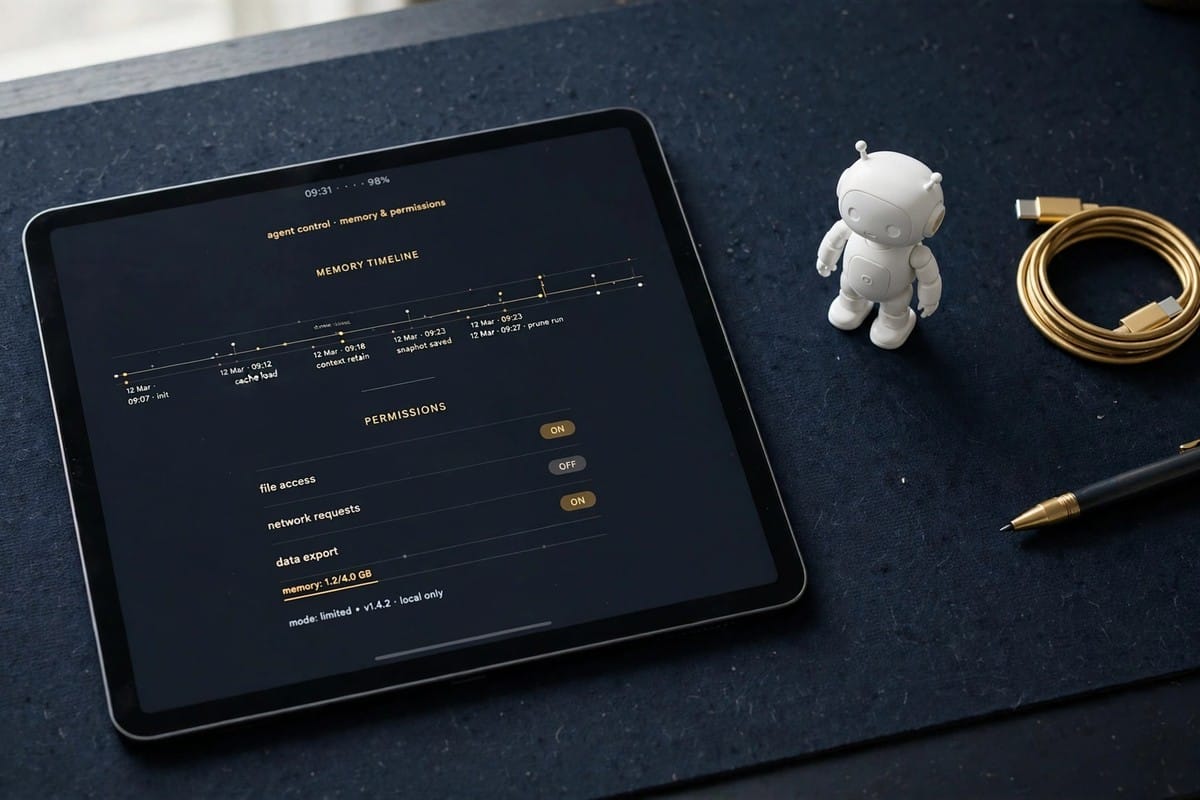
AI agents are getting a memory, and they are getting more freedom. On 6 November 2026, Anthropic published research showing how agents remember things and organise what they know. On 8 November, the authorities in Singapore issued a joint advisory: set strict limits on the autonomy of AI assistants and their access to personal accounts. The two stories belong together. More capable agents need clearer limits, and the time to set those limits is now, before the agent starts working in your business.
What Anthropic found
Anthropic's engineering team described a recipe for agent memory in four layers. In short: record while awake, organise while dreaming. The agent stores what it experiences and sorts it later into usable knowledge. In Anthropic's tests, the model Opus 5.5 scored 0.838 with memory, against 0.655 without it. That is a big difference for tasks that stretch over days. An agent that remembers your customers, your prices and your earlier decisions works differently from one that starts from zero every time.
Why memory matters for small businesses
Imagine an agent that answers customer enquiries and books appointments. Without memory, it asks the same things every time. With memory, it knows that Ms Meyer always comes on Tuesdays, that Mr Yilmaz wants an invoice in euros, and that a certain product is out of stock right now. That saves time and makes life easier for customers. Memory helps inside the business too: an agent that remembers how your quotes are built and which suppliers you use writes better drafts and makes fewer mistakes. GitHub is rebuilding its storage to handle 5,000 agents per project. Agents are becoming colleagues, not just tools.
The other side: more freedom means more risk
An agent with memory and access to your accounts can also do more damage. This week it was reported that a setting in Claude Code that switches off asking again led to 2,539 secrets being found exposed on GitHub. That is not a failure of the model alone. It is a failure of limits: someone allowed the agent to act without asking, and nobody checked what it gave away. A study by the organisation METR, published on 5 November, also shows that Anthropic is using AI to speed up its own AI development. Models are improving about twice as fast as a year ago. Agents will get better faster, and the time to think about limits gets shorter.
Five limits to set before you switch an agent on
- Decide what the agent may remember and what it may not. Customer preferences and product knowledge: yes. Passwords, bank details and private messages: no. Write the list down before you start the agent.
- Limit what the agent may do on its own. Draft replies: yes. Send emails, trigger payments or delete files: only with approval from a human. Set the agent so it asks before every important action.
- Give the agent only the accounts it really needs. An agent that books appointments needs the calendar, not the bank account. Separate the access instead of giving one tool everything.
- Check regularly what the agent has remembered. Once a month is enough: what is in its memory, what is outdated, what should be deleted? An agent with old knowledge makes old mistakes.
- Name one owner. One person on your team should keep the settings up to date, read the logs, and step in when the agent does something unusual.
What not to do
Do not switch off the asking just because it is more convenient. The setting that stops the agent asking is exactly the one that made headlines this week. Do not give an agent access to everything just because it is faster. And do not rely on the provider to sort it out: the limits in your business are your job, not the provider's.
Agents with memory are a real step forward. They remember, they learn, and they will be inside more and more tools in the coming months. If you set five limits now, you get the benefit without losing control. Start with the list: what may the agent remember, and what must it never do on its own? The answer fits on one page.
See our workflow automation service and our digital systems service. If agents should answer your customers, read our AI agents buyer checklist.
Frequently asked questions
Is an agent with memory already a real AI?
No. An agent with memory remembers facts you give it or that it learns from your work. It does not think like a person. But it becomes more useful and also riskier, because with more knowledge it can do more.
What does it cost to set limits for an agent?
Less than most people think. Write down what the agent may remember and what it may do on its own. Set it to ask before important actions. That takes an hour, not a week.
Can an agent with memory read my customer data?
Yes, if you set the limits right. An agent that only sees the calendar cannot read bank details. Separate the access and let a human approve important actions.
How often should I check an agent's memory?
Once a month is a good rhythm. Check what the agent has remembered, delete what is outdated, and read the logs of the last weeks. If something unusual shows up, step in.
Working on something like this?
Tell us what you are building. We reply to every enquiry.
Related service: AI Search Visibility (GEO)

AI agents just found cracks in old encryption. Check your business for 1024-bit RSA now
DeepMind AI agents found two weaknesses in old 1024-bit RSA encryption. Modern 2048-bit keys are not affected. Check now whether old systems in your business still use 1024-bit.
Read article
A $10 billion AI data centre is coming to Nova Scotia. What it means for Canadian businesses
EverWind plans a more than 10 billion dollar AI data centre in Point Tupper, and Anthropic has signed a 20 year lease. What it means for businesses, and the funding deadline on 20 November.
Read article
Your AI tools can now touch your bank account. A small business security checklist
AI assistants now connect to bank accounts and act on your behalf. That is useful and risky. Work through this checklist before you connect anything.
Read article